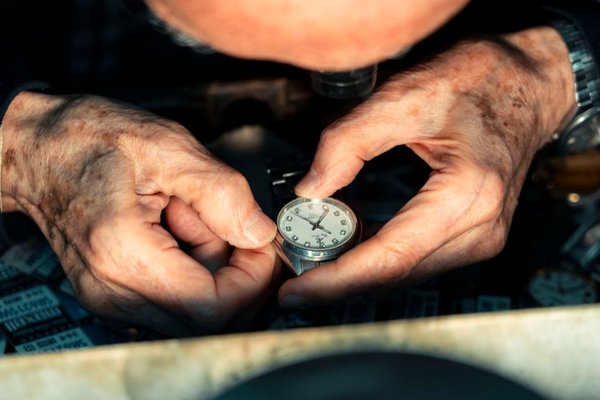
A mechanical watch asks for more attention than a battery-powered one, but caring for it should not become a chore. Its movement runs on a wound mainspring, and the parts inside respond to motion, temperature, shocks and magnetism. Good ownership is about knowing when to wind, when to leave it alone and when to seek help.
If you are learning how to care for a mechanical watch, start with the manual for your model. Crown positions, winding systems, water resistance and service advice vary. Small daily habits protect the movement without treating every timing variation as a fault.
Wind Your Watch Correctly
Manual-wind watches
A hand-wound watch needs regular winding. Remove it from your wrist so you can turn the crown straight without sideways pressure. In the designated winding position, turn slowly and smoothly. On many traditional movements, resistance increases as the mainspring reaches full wind; stop as instructed rather than forcing it.
Winding at roughly the same time each day can help establish a routine. The owner’s guide, not a universal number of crown turns, should determine how much winding is appropriate. Understanding manual-wind versus automatic watches also helps explain why models need different habits.
Automatic watch care
An automatic movement uses a rotating weight to wind the mainspring as your wrist moves. Regular wear may keep it running, but gentle manual winding is useful after it stops, provided the movement supports it. Follow your model’s instructions before setting the time. Vigorous shaking is unnecessary.
If you alternate watches, it is normal for an automatic to stop in storage. Restarting it carefully is fine. A watch winder may be convenient for a complicated calendar watch, but is not essential for most automatics.
Handle the Crown, Time and Date Carefully
Check whether the crown screws down before pulling it. Unscrew it gently, use the correct setting position and close it securely afterward. Never force a crown that seems stuck.
Be careful with quickset dates. Adjusting the date while some movements are beginning their automatic date change can damage their mechanisms. The restricted hours vary by calibre, so consult your manual. If uncertain, move the hands to a safe daytime position according to the maker’s instructions before adjusting the date.
There is no need to chase perfect synchronization all day. Mechanical watches naturally gain or lose some time. Compare performance with the manufacturer’s stated tolerance over several days, not a single afternoon.
Clean the Outside Without Damaging the Inside
Daily mechanical watch maintenance can be as simple as wiping the case and crystal with a soft microfiber cloth. Clean perspiration from the case back and metal bracelet. Avoid abrasive polishes, solvents and spraying household cleaners directly onto the watch.
Some manufacturers permit gentle washing of water-resistant models when their crowns are fully closed. That does not automatically apply to vintage watches, ageing seals or leather straps. When unsure, use a lightly dampened cloth only where suitable, then dry carefully. Follow the strap maker’s advice.
Skip home case polishing. Removing metal can soften the original edges, and scratches are often better left until a professional can discuss options.
Respect Water Resistance
A depth rating comes from controlled testing, not a guarantee that every watch stays safe for every water activity forever. Seals age, crowns can be left open and impacts may compromise the case. Do not assume a watch marked 30 metres is suitable for swimming. Follow the maker’s activity guidance and consider a pressure test before substantial water exposure, particularly with older watches.
For example, before a beach trip, confirm that the screw-down crown is secured after setting the date. If your model is approved for salt-water use, follow its fresh-water rinsing instructions afterward. If moisture or fog appears beneath the crystal, avoid further water exposure and seek prompt professional assessment.
Keep Magnets, Shocks and Heat in Mind
Magnetic exposure
Mechanical movements can be affected by magnetic clasps, speakers and charging accessories. Magnetism may cause sudden changes in timekeeping, sometimes persisting after the watch is moved away. Avoid storing it directly on a magnetic phone charger or tablet cover. A watchmaker can test and demagnetize it if needed.
Physical impacts and temperature
Remove your watch for activities likely to knock it against hard surfaces, such as heavy tool work or contact sports, unless the maker rates it for that use. Avoid leaving it on a hot car dashboard or near a heater. Normal variations from temperature and position are expected; harsh exposure is best avoided.
Make Watch Storage Simple
For everyday watch storage, a clean, dry box with soft lining is enough. Keep it away from damp bathrooms, sunlight, dust and magnetic accessories. Close the crown before storing it, and let damp straps dry naturally rather than sealing them in a box.
If you rotate several watches, store them separately to prevent scratches. Try a simple weekly ritual: wipe each watch after its last wear, check the crown and place it in its own compartment. Wind or reset it when you next need it. Follow the maker’s guidance for long-term storage, especially for vintage pieces or unusual complications.
Recognize When Watch Servicing Is Needed
Professional watch servicing may include movement inspection, cleaning, lubrication, replacement of worn parts, timing adjustment and checking case seals. Intervals vary considerably by manufacturer and model: some advise checks every few years, others much longer. Follow the recommendations for your watch, its age and how it is used rather than applying one universal schedule.
Seek advice sooner if the watch takes a hard knock, shows condensation, winds abnormally, stops despite adequate winding or develops a persistent, sudden change in accuracy. Record when the issue began and whether there was recent exposure to water or magnets. That history helps with diagnosis.
For collectible watches, discuss originality before approving new hands, dials or case polishing. Preserving the original finish may matter as much as restoring performance. A guide to mechanical watch service costs can help with budgeting, but only an inspection can provide a reliable quote.
Frequently Asked Questions
Should I wind my mechanical watch every day?
Wind a manual watch according to its instructions, often daily. An automatic worn regularly may not need extra winding. If it stops, use its model-specific restart guidance.
Is letting an automatic watch stop harmful?
Usually not. Stopping during storage is normal. Carefully restart and reset it when needed; most automatics do not require a continuously running winder.
Can I clean my mechanical watch with water?
Only if its current water resistance, strap material and manufacturer instructions permit it. When uncertain, use a soft cloth and seek professional advice before washing or immersion.
How can I tell if my watch needs service?
Watch for abnormal winding resistance, repeated stopping, moisture under the crystal or an abrupt timekeeping change. Also follow the manufacturer’s recommended service schedule.
Build Habits That Last
Good mechanical watch care is a handful of consistent habits: wind gently, wipe off grime, respect water and magnets, and store the watch securely. Learn what is normal for your movement, then act on meaningful changes rather than every lost second. Thoughtful care and timely professional attention can keep a mechanical watch running well for years.