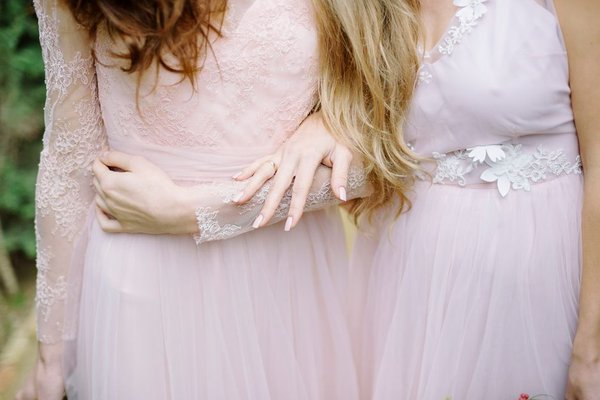
The maid of honor should feel special, but her dress does not need to announce itself from the other end of the aisle. The most memorable bridal-party looks usually have a clear relationship: the bridesmaids belong together, the maid of honor has a subtle distinction, and the bride remains the focus. Getting that balance right is less about choosing the fanciest gown and more about deciding which detail should be different.
Choose One Feature That Makes the Dress Different
A useful starting rule is to change one main element and keep the others connected. If the maid of honor wears a different color, match the general silhouette or fabric. If she wears a different neckline, keep the shade consistent. Several changes at once can make her look like a guest rather than part of the wedding party.
Try a Neighboring Shade Instead of a Contrasting Color
A tonal difference is one of the easiest ways to create distinction. Imagine four bridesmaids in dusty blue chiffon and a maid of honor in a slightly deeper slate blue. The colors read as a family, but the central dress has enough definition to stand out when everyone is lined up.
Other workable combinations include sage with muted olive, soft mauve with dusty rose, or champagne with a slightly richer taupe. Undertones matter more than the names on product pages. Two dresses both described as “sage” can look surprisingly different when one leans gray and the other yellow.
Order swatches and view them outdoors, indoors, and beside the wedding flowers. A shade that looks harmonious on a laptop screen may appear much brighter under warm reception lighting. For broader inspiration, explore bridesmaid dress color palettes before committing to a final pairing.
Keep the Color and Change the Fabric
When the bride wants a uniform palette, texture can do the distinguishing work. A satin maid of honor gown among chiffon bridesmaid dresses creates a soft contrast through sheen and movement rather than color. A crepe chief bridesmaid dress can also look quietly structured beside floatier gowns.
This approach works best when the fabrics are similar in formality. Heavy velvet next to light summer chiffon can feel disjointed, while satin and chiffon in closely matched shades often look coordinated. Check how each material photographs: reflective satin may look several shades lighter where it catches the sun.
Let the Neckline Be the Signature Detail
If everyone is wearing the same fabric and color, a different neckline can be enough. Bridesmaids in simple V-necks might pair with a maid of honor in a softly draped cowl neck. A square neckline alongside modest scoop necklines creates another subtle difference.
Keep the overall style language consistent. A dramatic plunging neckline, oversized sleeves, or elaborate train can draw attention away from an otherwise restrained bridal party. The best choice should flatter the wearer while still feeling connected to the other dresses.
Before ordering, compare full-length photos of every silhouette side by side, not just cropped product images. Our guide to bridesmaid dress necklines can help narrow the options without making every dress identical.
Use Small Embellishments With a Light Touch
A slim waistband, covered buttons, delicate pleating, or restrained beading can mark the maid of honor’s role without creating a second bridal look. The detail should be noticeable up close, not dominate from the ceremony’s back row.
Be especially careful with white lace, extensive sparkle, and dramatic overskirts if the bride’s dress features similar details. These are not universally forbidden, but the bride should approve them first. If the gowns already have decorative necklines, a simple dress may actually feel more polished than another embellished option.
Coordinate Accessories Without Matching Everything
Sometimes the dresses should stay identical, and accessories can supply the difference. The maid of honor might wear slightly longer earrings, a distinctive hair comb, or a bouquet with one additional flower variety. That makes the styling flexible and often less expensive than sourcing another gown.
Choose one accessory difference rather than changing jewelry, shoes, hair, and bouquet simultaneously. Matching metal tones and similar shoe formality keep the group cohesive. For finishing touches, see wedding day accessories ideas that work across different dress styles.
Test the Look as a Group Before Buying
The strongest decisions happen with the full lineup in mind. Make a simple collage showing the bride’s gown, bridesmaid dresses, maid of honor option, and flowers against the venue’s likely background. Arrange the dresses in ceremony order. If the maid of honor seems disconnected in the collage, she may feel disconnected on the day.
For example, in a garden wedding with pale pink bridesmaids and abundant greenery, an equally pale blush maid of honor dress in satin might disappear into the group. A slightly deeper rose shade in the same matte fabric could provide clearer definition without looking competitive.
Take test photographs in natural light and with flash if possible. This is especially useful for pale neutrals, shiny fabrics, and shades that shift under different light. Ask the bride whether the contrast feels noticeable enough, rather than assuming that more contrast is always better.
Make Sure the Dress Works for the Wedding Day
The maid of honor may help manage a bouquet, straighten the bride’s train, move between photo locations, and stand for long periods. A beautiful dress that restricts arm movement or needs constant adjustment is a poor trade-off.
Check whether the wearer can bend, sit, walk on the venue’s surfaces, and lift her arms comfortably. Budget for alterations, appropriate undergarments, and shoes early. A practical, well-fitted dress will usually look more sophisticated than a dramatic style that never sits quite right.
Frequently Asked Questions
Does the maid of honor dress have to be a different color?
No. She can wear the same color as the bridesmaids and stand out through a neckline, fabric texture, subtle accessory, or bouquet detail. Some couples prefer perfectly matching dresses, which is equally valid.
Should the maid of honor dress be longer than the bridesmaids’ dresses?
Not necessarily. Matching lengths often create the cleanest group silhouette. A longer dress can work when the formality is consistent, but a floor-length gown beside casual knee-length dresses may feel out of place.
Who chooses the maid of honor dress?
The bride usually sets the overall direction, while the maid of honor should have a voice in fit, comfort, and budget. Agreeing on a color range and formality level before shopping can prevent awkward last-minute changes.
Can the maid of honor wear a patterned dress?
Yes, particularly for relaxed or garden weddings, but keep the print tied to the bridal-party palette. A small floral pattern can work with solid dresses if its scale and contrast do not overpower the group.
A Look That Belongs and Stands Out
The best maid of honor dress feels like a thoughtful part of the wedding design. Choose one meaningful difference, check it beside the whole bridal party, and make sure the wearer can enjoy the day comfortably. Subtle coordination gives her a distinct place in the photographs without competing with the bride or breaking the visual harmony.