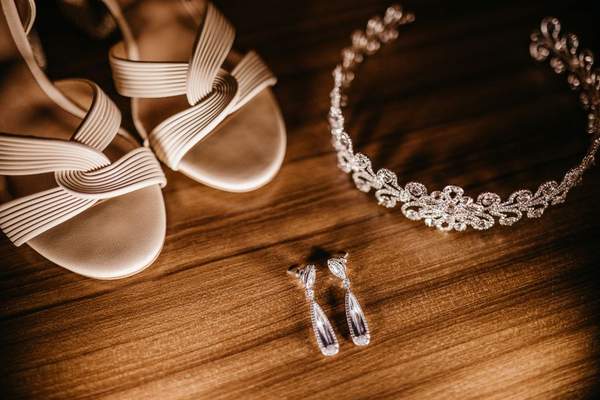
Your wedding dress may be the centrepiece of your bridal look, but the smaller details make everything feel complete. A thoughtful bridal accessories checklist helps you coordinate your style, stay comfortable, and avoid last-minute panic. Every choice should support both your appearance and the way your day will unfold.
Plan accessories in stages. Choose anything that affects dress fittings first, test pieces that touch your skin or hair, and pack the final wedding day essentials in labelled pouches. Use this bride checklist to cover the details that are easy to overlook.
Accessories to Buy Before Dress Alterations
Wedding shoes
Buy your main shoes before significant alterations because heel height affects the finished dress length. Walk in them on carpet and hard flooring to identify pressure points. Consider the venue: narrow heels can sink into grass, while smooth soles may slip on polished floors. Pack flats or low heels for dancing if needed.
Underwear and shapewear
Bring the exact bra, cups, shapewear, or seamless underwear you plan to wear to every fitting. Foundation garments can change how a bodice sits and may show under lightweight fabric. For backless or strapless dresses, ask whether sewn-in cups would work better. Test adhesive products before the wedding morning.
Petticoat, hoop, or underskirt
Some gowns need an underskirt to hold their shape or improve movement. Confirm whether your boutique supplies one and wear it during alterations. Practise sitting, climbing stairs, and entering a car in the complete outfit. Learn how the bustle fastens and assign one person to secure it after the ceremony.
Finishing Pieces for Your Bridal Look
Veil or alternative headpiece
Choose a veil that complements rather than competes with your dress. Compare its length, edging, and embellishment with the gown. Detailed dresses often suit a simple veil, while minimalist designs can carry lace, pearls, or embroidery. Alternatives include a cape, bow, flower crown, or hat. Take your chosen piece to the hair trial so the stylist can position it securely.
Hair accessories
Your options may include a comb, tiara, pearl pins, fresh flowers, clips, or a headband. Check that the tones work with your jewellery and dress details. When using fresh flowers, ask which varieties remain attractive without water. Keep plain grips nearby as backup.
Bridal jewellery
Select earrings, a necklace, bracelets, rings, and family pieces with the dress neckline in mind. A high or embellished neckline may need only earrings, while a simple strapless gown leaves room for a necklace. Wear each item for a few hours to check its weight, sharp edges, and skin sensitivity. Clean heirlooms early enough to repair loose stones or clasps.
A wedding dress neckline guide and advice on choosing jewellery for your face shape are useful internal resources to consult at this stage.
Comfort, Weather, and Venue Essentials
Outer layer
A wrap, tailored jacket, cardigan, stole, cape, or shawl can protect you from cold air without hiding the dress. Even summer weddings may include cool evenings or windy photographs. Choose a layer that is easy to put on without disturbing your hairstyle or veil.
Bag or clutch
A small bridal bag can hold lipstick, tissues, mints, medication, and your phone. Decide who will keep it during the ceremony and photographs. Avoid filling it with the entire emergency kit; it should contain only items you may need quickly.
Venue-specific extras
Think through the surfaces and weather. Heel protectors help on lawns and gravel, while an umbrella can save outdoor portraits during light rain. Sunglasses may be useful at a bright reception, and insect repellent can matter beside water or woodland. For a beach ceremony, consider barefoot sandals and a small towel for removing sand.
Meaningful and Ceremonial Accessories
Something old, new, borrowed, and blue
If you are following this tradition, assign each item before the final week. The blue element could be ribbon inside the dress, jewellery, shoes, or embroidery. Collect borrowed pieces early, store them safely, and plan their return. Tell the person holding your accessories where each item belongs.
Cultural or religious items
Your ceremony may require a head covering, gloves, rosary, family jewellery, garland, ceremonial scarf, or second pair of shoes. Confirm expectations with your officiant, family, or venue. If you will change outfits, pack a separate labelled accessory set for each look.
Pack a Wedding Morning Accessories Kit
One week before the wedding, gather everything and try on the full look. Divide items into labelled pouches for jewellery, hair accessories, clothing, shoes, and practical supplies. Include spare earring backs, fashion tape, blister plasters, safety pins, tissues, stain remover, a compact mirror, and personal medication.
A useful real-world method is to ask the person helping you dress to photograph the open pouches during your final rehearsal. On the wedding morning, that image becomes a visual inventory. It is easier to spot a missing bracelet or veil comb in a photo than while several people are moving around the room.
Keep rings and legal documents separate and assign them to specific people. Your bridal accessories bag should not become storage for items belonging to the best man, officiant, or venue coordinator.
Your Final Planning Timeline
Two to six months before
Choose shoes, underwear, shapewear, veil, headpiece, and major jewellery. Bring fitting-related items to alterations appointments and book your hair trial. A bridal hairstyle guide or wedding beauty timeline can help coordinate the remaining appointments.
Two to four weeks before
Wear-test shoes and jewellery, collect borrowed pieces, check the weather plan, and buy venue-specific extras. Clean jewellery, inspect clasps, remove labels, and confirm that everything works with the final dress fit.
One week before
Complete a head-to-toe try-on, pack the labelled pouches, and share responsibilities with your wedding party. Store the bags somewhere safe but visible.
Frequently Asked Questions
When should a bride buy her accessories?
Buy shoes and foundation garments before alterations. Choose veils, jewellery, and hair accessories after the dress but early enough to use during trials and exchange if necessary.
Should bridal jewellery match the wedding ring?
It does not need to match perfectly. Mixed metals can look elegant when intentional. Repeating one finish in two or more places helps the look feel coordinated.
What belongs in a bridal emergency kit?
Useful basics include fashion tape, safety pins, blister plasters, tissues, spare earring backs, stain remover, deodorant, mints, pain relief, and touch-up makeup. Adapt the kit to your outfit, venue, weather, and personal needs.
Who should carry the bride’s accessories bag?
Choose one dependable person and tell the wedding party who has it. This prevents people from moving the bag or assuming someone else is responsible.
Complete the Look Without Overcomplicating It
The best bridal accessories are not simply pieces that look beautiful in photographs. They should work with your dress, remain comfortable for hours, suit the venue, and help you feel like yourself. Plan early, test each item in realistic conditions, and give every important piece a labelled place and a named person responsible for it. With that preparation, the final details will feel enjoyable rather than rushed.