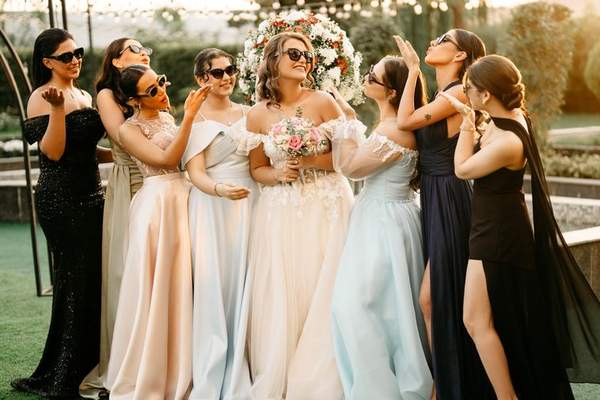
Bridesmaid fashion is moving further away from the idea that every attendant needs to look identical. The strongest bridesmaid dress trends 2026 are about creating a wedding party that feels coordinated without looking overly styled. Brides are still choosing a clear visual direction, but they are giving friends more room to select silhouettes, necklines and fabrics that suit their bodies and personal style.
The result is a more relaxed approach: less “uniform”, more shared aesthetic. For couples planning a wedding this year, the smartest choices balance individuality with enough consistency to look intentional in photographs.
Mismatched Bridesmaid Dresses Are Becoming More Refined
Mismatched bridesmaid dresses are not new, but the 2026 version looks more considered. Instead of asking everyone to choose any dress in roughly the same colour, brides are setting two or three clear rules. That might mean one colour family with different necklines, one fabric across several shades, or a tightly edited palette with a mix of solids and prints.
The key is controlled variation. A summer wedding party might combine soft sage, olive and muted eucalyptus dresses while keeping every hemline floor length. Another group could wear the same deep navy satin but choose between halter, one-shoulder, cowl-neck and strapless silhouettes. Both approaches create unity without forcing every bridesmaid into the same cut.
Single-Colour Palettes Still Work, but Silhouettes Are Looser
Matching colour remains a dependable option for brides who want a polished ceremony look. What is changing is the expectation that matching colour must also mean matching shape. Many bridesmaid dresses 2026 collections offer one shade across several silhouettes, making it easier to accommodate different heights, busts and comfort preferences without losing visual consistency.
If you prefer this route, compare fabric swatches in natural light before ordering, because shades such as sage, champagne or dusty blue can vary noticeably between brands.
Earthy Neutrals and Richer Colours Are Sharing the Spotlight
Soft greens, warm browns, muted blues and creamy neutrals continue to suit modern weddings because they work across countryside, city and destination settings. At the same time, richer colours are gaining ground. Deep red, burgundy, chocolate, black and jewel tones can create a more fashion-forward wedding party, particularly for autumn, winter or evening celebrations.
Start with the venue and overall wedding palette rather than choosing a colour simply because it is traditionally associated with bridesmaids. A warm terracotta room may call for softer neutrals, while a clean white venue can handle stronger colour. Wedding Colour Palette Ideas is a useful internal topic for connecting attire with flowers, stationery and décor.
Florals and Prints Are Moving Into the Mainstream
Floral bridesmaid dresses are becoming a serious alternative to plain gowns. Smaller prints can feel romantic and understated, while larger botanical patterns make a stronger statement. They work particularly well for garden weddings and celebrations where the bridal party styling is meant to feel personal rather than strictly formal.
Prints can also be mixed with solids. One practical formula is to choose one floral dress containing three or four colours, then assign the remaining bridesmaids solid dresses drawn from that print. This creates a clear visual connection without making the group look too matched.
Texture Is Doing More of the Styling Work
Satin remains popular because of its clean drape and evening-ready finish, but chiffon, crepe, soft organza and textured fabrics are adding movement and depth. A wedding party dressed in one neutral tone can still look interesting when the finishes vary slightly.
This is where a bridesmaid style guide becomes useful: fabric should be chosen for both appearance and setting. Lightweight chiffon is easier for a warm outdoor ceremony, while heavier satin or crepe can suit cooler weather and formal venues. Think about how the material photographs, moves while walking and feels after several hours.
Wearability After the Wedding Matters More
Brides are increasingly choosing dresses that resemble stylish occasionwear rather than highly specific bridal-party clothing. Sleek midis, minimalist maxi dresses, modern necklines and uncomplicated shapes give attendants a better chance of wearing the outfit again.
If rewearability matters, look for adaptable colours and silhouettes rather than novelty details. A simple black, deep green, navy or chocolate dress may work later for dinners, formal events or other weddings. How to Choose Bridesmaid Dresses for Different Body Types is another useful internal topic when narrowing down silhouettes.
How to Coordinate a 2026 Bridesmaid Look
The easiest way to avoid confusion is to decide what must match and what can vary. Give the wedding party a short brief covering the approved colour range, length, level of formality and any fabric restrictions. Add a few reference images so everyone understands the direction.
A useful real-world approach is to arrange a shared try-on session several months before the wedding. Ask each bridesmaid to bring or order two preferred options within the brief. Photograph the dresses together in daylight, then judge the group as a whole. This quickly reveals whether one shade is too bright, one fabric feels out of place or the mix needs more balance.
Accessories can finish the coordination. If the dresses vary, keeping shoes, jewellery or bouquets relatively consistent can create a stronger connection. If the dresses match closely, accessories can be more individual. Bridesmaid Accessories and Shoes is a natural internal topic to support this part of the planning process.
Frequently Asked Questions
Are mismatched bridesmaid dresses still in style for 2026?
Yes. The look remains popular, but the most polished versions use clear boundaries such as a shared colour family, consistent length or coordinated fabric. Completely unrestricted choices can look accidental, so a simple visual brief helps.
What colours are popular for bridesmaid dresses in 2026?
Soft greens, muted blues, warm neutrals and earthy browns remain versatile, while burgundy, deep red, black and jewel tones offer a richer alternative. The best choice depends on the season, venue, wedding palette and the people wearing the dresses.
Do all bridesmaids need to wear the same fabric?
No. Mixing fabrics can add dimension, especially within a single-colour palette. Keep the overall level of formality similar so one dress does not feel noticeably more casual or more glamorous than the others.
How far in advance should bridesmaid dresses be chosen?
Start early enough to allow for ordering, exchanges and alterations, particularly if several bridesmaids are buying from different retailers. Finalising the direction several months before the wedding gives everyone more time to find a flattering option within budget.
Choosing the Right Direction for Your Wedding Party
The defining idea behind bridesmaid dress trends 2026 is flexibility with intention. Fully matching gowns can still look elegant, while controlled mismatching, floral prints, richer colours and varied silhouettes offer more personality. The best wedding parties are not necessarily the ones following the most trends; they are the ones where the dresses suit the people wearing them and still support the visual story of the day.
Set a clear framework, give bridesmaids meaningful choices and judge the collection as a group. That combination makes it easier to create a wedding party that feels current, comfortable and genuinely cohesive.